


Sep 10 Loss of 988 ‘press 3’ option sparks concern for LGBTQ+ youth suicide prevention
NEXTpittsburgh – Since the 988 crisis hotline went live in 2022, it has provided confidential support to millions of individuals grappling with thoughts of suicide, depression or other mental health challenges.
But in July, a special option for 988 callers who are LGBTQ+ was eliminated as part of sweeping cuts to social services in President Donald Trump’s Big Beautiful Bill.
The toll-free 988 hotline, available 24/7, is a federally funded initiative.
Among its features was an option for 988 callers to access counselors experienced in LGBTQ+ issues and challenges.
After the so-called “press 3” choice disappeared, organizations in Pittsburgh that focus on behavioral health began collaborating on how best to continue supporting LGBTQ+ individuals who contact 988, especially teens who are struggling.
The aim is to “do a warm handoff if a person [needs] someone with lived experience” to assist them, says Monique Jackson, executive director of the Staunton Farm Foundation, which funds nonprofits that offer behavioral and mental health treatments and programs in the 10-county Pittsburgh region.
LGBTQ+ youths are more than four times as likely to attempt suicide as other young people, according to The Trevor Project, which provides resources, education and advocacy for LGBTQ+ individuals ages 13-24.
A 2024 survey by The Trevor Project found 39% of LGBTQ+ youths seriously considered attempting suicide during the 12 months of the study.
“The last thing you want is a person on the phone who isn’t trained to respond to LGBTQ+ youth,” says Sarah Rosso, executive director of the Hugh Lane Wellness Foundation, a North Side-based organization that offers services for LGBTQ+ individuals and people living with HIV.
“We want the widest safety net available.”
About 1.6 million calls to 988, or about 11% of all callers used “press 3” from September 2022 through July 2025, according to the Substance Abuse and Mental Health Services Administration, an agency of the U.S. Department of Health and Human Services that oversees the hotline.
With that option eliminated, says Jackson, 988 counselors in Pennsylvania ideally will be able to transfer callers seeking LGBTQ+ expertise to other agencies throughout the state that can help, such as Hugh Lane Wellness.
Among the groups Staunton Farm is working with to develop resources are Hugh Lane and UPMC’s resolve Crisis Services which offers free services through a hotline (1-888-796-8226) and at a walk-in center in North Point Breeze.
It’s important to have training in LGBTQ+ issues, says Rosso, in order to assist callers with crisis situations that may include “coming out to your family, experiencing family rejection, and transgender care.”
Because the Trump administration wants to cut federal funds to access gender-affirming care, including hormone therapies and surgeries for those under age 19, “[crisis counseling] services are more important than ever,” Rosso says.
But Rosso and Jackson say the monthslong delay in finalizing a state budget has left organizations uncertain how to proceed with supplementing 988 services.
“We’re in a wait-and-see pattern,” says Jackson. “What’s needed will hinge on what’s in the state budget.”
Last month, Gov. Josh Shapiro said he directed the state Department of Human Services to train 988 operators to handle LGBTQ+ callers.
Pennsylvania 988 operators are also being trained to connect LGBTQ+ callers to The Trevor Project, which has its own crisis hotline, 1-866-488-7386.
Jackson and Rosso hope the state budget, when it’s passed, will include funds to continue the 988 hotline, offer training and “find alternative solutions so LGBTQ+ people have access to something like the press 3 option,” says Rosso.
Hugh Lane offers training for organizations, medical providers and educators who want to boost competency in LGBTQ+ issues, says Rosso.
The nonprofit has promoted its training programs as part of recognizing September as Suicide Prevention Month, which includes World Suicide Prevention Day on Sept. 10.
Hugh Lane’s supports for LGBTQ+ youths include a mentorship program, life skills workshops, group support sessions, school-based education initiatives, after-school activities, summer camps and a drop-in center located in East Liberty.
The organization does not provide counseling services but provides referrals for therapy, says Rosso.
Hugh Lane received a grant of $132,000 in 2022 from Staunton Farm Foundation. Other funding has included a $2 million gift last year from Yield Giving, a charitable fund established by MacKenzie Scott, ex-wife of Amazon founder Jeff Bezos.
The Yield Giving funds will be used to establish a LGBTQ+ youth and family resource center, Hugh Lane said when the gift was announced.
Upstreet, an initiative of Jewish Family and Community Services, was launched in 2020 for youths ages 12-22 who were dealing with mental health issues.
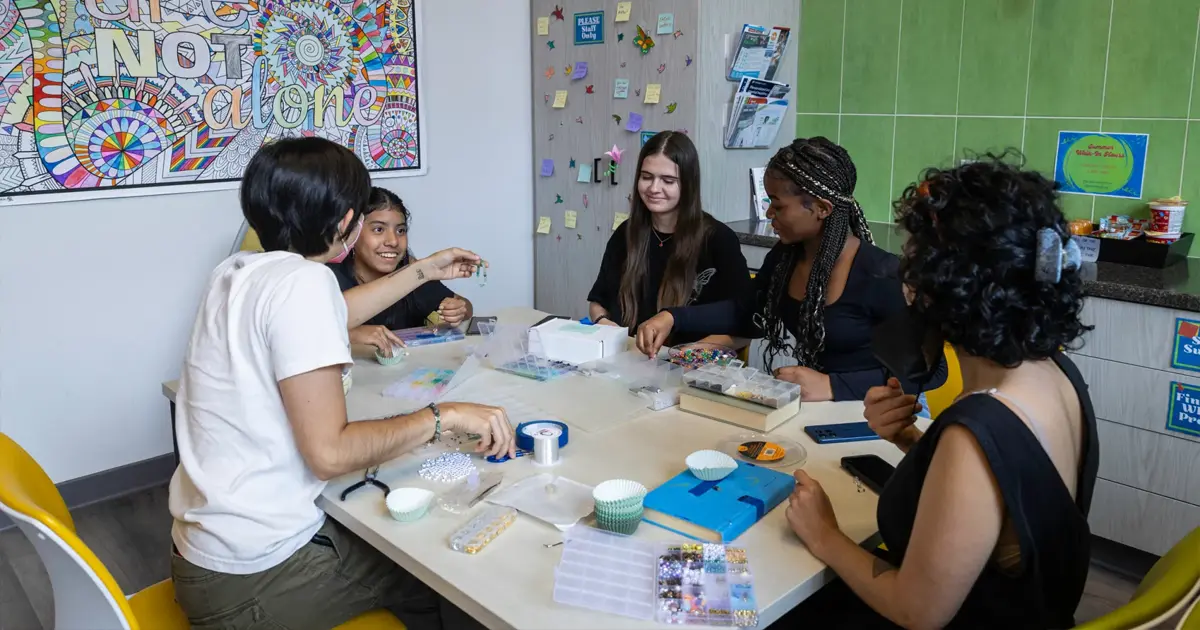
Among its clients are LGBTQ+ youths who can receive virtual or in-person support at its drop-in location in Squirrel Hill, says Alliyah Kimbrough, adolescent and young adult therapist at Upstreet.
Last year, more than 1,300 youths received services from Upstreet through a combination of one-on-one therapy, virtual counseling, drop-in visits and school-based groups.
For individuals who don’t have medical insurance to cover therapy sessions, services are free of charge, says Kimbrough.
During Suicide Prevention Month, Upstreet will promote its services on Instagram and TikTok, she says.
“We’re always thinking about suicide, its seriousness and safety,” says Kimbrough.
Staunton Farm Foundation has made grants to JFCS to fund Upstreet, including $100,000 in 2020 and $700 in 2023.
Kimbrough says risk factors for suicide for all teens, including LGBTQ+ individuals, include:
- Not having a trusted person to talk to;
- Stress on top of typical life adjustments and changes that teens experience;
- Feeling overwhelmed by problem-solving and decision-making;
- Changes in families and friendships;
- Social media pressures and assumptions that everything on social media is real.
“We have to remind [teens] that social media is like taking a photo,” says Kimbrough. “It’s hard to get the full picture. We need to remind them that they may only be seeing a portion of somebody’s life or experience. It’s not the whole picture.”
If you are having thoughts of suicide, call or text 988 to reach the National Suicide Prevention Lifeline. Other resources include the American Foundation for Suicide Prevention and The Trevor Project.